
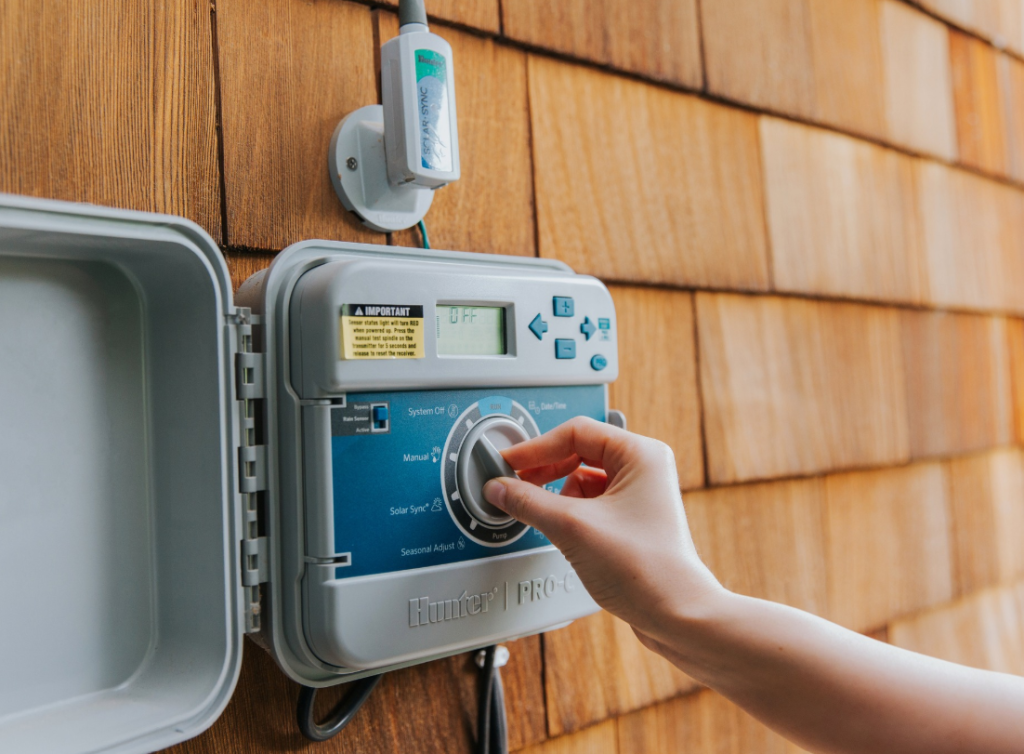
Winter Irrigation: When to Turn the Dial to Zero
On the California Central Coast, winter is our season of biological recovery. It is the only time of year when our native landscapes receive the deep, profile-saturating hydration they evolved to require. Yet, a drive through any neighborhood in San Luis Obispo or Santa Barbara in January often reveals irrigation systems running during a rainstorm or saturating dormant gardens.
As an independent consultant, I view the “off-switch” as one of the most powerful tools in your management arsenal. Understanding when to turn your irrigation dial to zero isn’t just about saving money—it’s about preventing the catastrophic root failures that occur when we “over-manage” a dormant landscape.
1. The Physiology of Dormancy
Most trees and woody shrubs on the Central Coast enter a state of physiological rest during the winter. Deciduous trees like Western Sycamores drop their leaves to conserve energy, while even our evergreen Coast Live Oaks significantly slow their metabolic processes as the soil temperature drops.
- Reduced Water Demand: When a tree isn’t actively growing new shoots or “breathing” through a full canopy of leaves, its water requirement drops by as much as 90%.¹
- The Root Danger: Roots still require oxygen to survive. In our heavy winter soils, adding supplemental irrigation to natural rainfall creates an anaerobic (oxygen-free) environment that effectively drowns the root system.
2. The “Rain Sensor” Fallacy
Many property owners rely on a basic rain sensor to manage their winter watering. While these are better than nothing, they are often insufficient for the unique demands of the Central Coast.
- Evaporation Rates: In the winter, the sun is lower and the days are shorter. Even after the rain stops, the soil stays moist much longer than it would in July. A rain sensor might dry out and “click” the system back on in three days, even though the soil remains at field capacity for two weeks.²
- The Smart Manual Approach: For most of my clients, I recommend a “Manual-Off” policy from December through March. Unless we are in the middle of a record-breaking mid-winter heatwave, the natural moisture in the soil profile is usually more than enough to sustain your botanical assets.
3. When Zero Isn’t the Answer: The “Dry Winter” Exception
While “zero” is the goal, we must remain adaptive. Every few years, the Central Coast experiences a “dry winter” where the rains fail to materialize. In these specific cases, a complete shut-off can be damaging.
- Evergreen Stress: Species like Citrus and Avocados do not go fully dormant. If we go 30–45 days without rain in January, these trees may require a single, deep “supplemental soak” to prevent salt accumulation and leaf drop.³
- New Plantings: Trees in their first “3-Year Weaning Process” have not yet developed the root depth to survive a bone-dry winter. These young assets still require monitoring and occasional hydration if the rain totals fall significantly below average.⁴
4. The Consultant’s Verdict: The “1-Inch” Rule
A professional winter strategy is simple: If we receive one inch of rain in a single storm cycle, you can typically leave your irrigation system off for at least three to four weeks, regardless of how green the grass looks on the surface. Digging a small “test hole” to a depth of 6 inches is the only way to truly know if your landscape needs a drink or a rest. Turning the dial to zero allows the soil to “breathe,” encourages deeper root architecture, and is the single best way to prevent the fungal pathogens that thrive in cold, wet dirt.⁵
Professional References
1 Harris, Richard W., Arboriculture: Integrated Management of Landscape Trees, Shrubs, and Vines, 4th Edition, Prentice Hall, Page 288.
2 Costello, Laurence R., Training Young Trees for Structure and Form, University of California Agriculture and Natural Resources, Page 45.
3 Gilman, Edward F., An Illustrated Guide to Pruning, 3rd Edition, Delmar Cengage Learning, Page 162.
4 Watson, Gary W., The Root System of Landscape Trees, International Society of Arboriculture, Page 92.
5 Shigo, Alex L., Modern Arboriculture, Shigo and Trees, Associates, Page 198.
Need a Professional 2nd Opinion?
The “Off-Switch” is the most underutilized tool in Central Coast landscaping. Mismanaging winter water is a leading cause of the “silent” root decay that leads to catastrophic tree failure during our spring windstorms.
At ArborSolutions, we provide the data you need to manage your property’s water budget with confidence. We do not sell irrigation systems, “smart” controllers, or landscaping services. We provide unbiased professional advice to ensure your landscape assets are protected through every season.
Not sure if your soil is too wet or too dry? Book a Walking-Talking Tour for a site-specific diagnostic and a clear, science-based path forward.