
Balancing Canopy Cover with Defensible Space
In Santa Barbara and San Luis Obispo Counties, we live in a “fire-climax” ecosystem. While we love our lush canopies, we must manage them to protect our homes. The goal isn’t to clear-cut your property; it’s to create horizontal and vertical separation.
Vertical Separation: The Ladder Fuel Rule
Fire travels from the ground up. If you have low-hanging tree branches touching shrubs or tall grasses, you have created a “ladder.” We recommend “limbing up” your trees to at least 6–10 feet from the ground (depending on the height of the understory) to break the fire’s path.
Horizontal Separation: The Canopy Gap
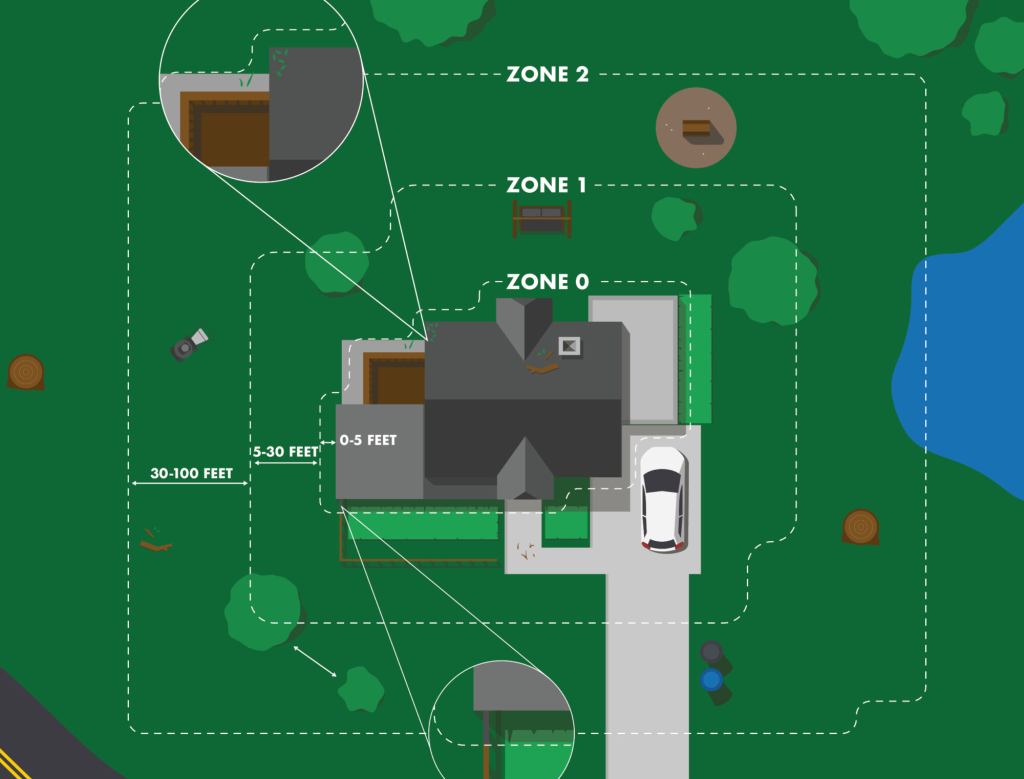
In the Defensible Space Zone (usually within 30–100 feet of the home), we want to avoid “continuous” canopy. Ideally, there should be a 10-foot gap between the outer edges of tree canopies. This prevents a fire from “crowning” and moving rapidly from tree to tree toward your roof.
The “Clean, Lean, and Green” Strategy
- Clean: Remove dead wood and palm fronds annually.
- Lean: Prune to reduce the total fuel load (density) within the canopy.
- Green: Prioritize high-moisture, fire-resistant species near the home.
Footnotes: ¹ CAL FIRE. “Public Resources Code 4291: Defensible Space.” ² University of California Agriculture and Natural Resources (UC ANR). “Landscaping for Fire Protection.”
The ArborSolutions Diagnostic
Many homeowners over-prune out of fear, which can actually stress the tree and create more dead “fine fuels.” We help you create a vegetation management plan that satisfies local fire compliance while keeping your trees healthy and beautiful.