
The Mulch Layer: Much More Than Just Decoration
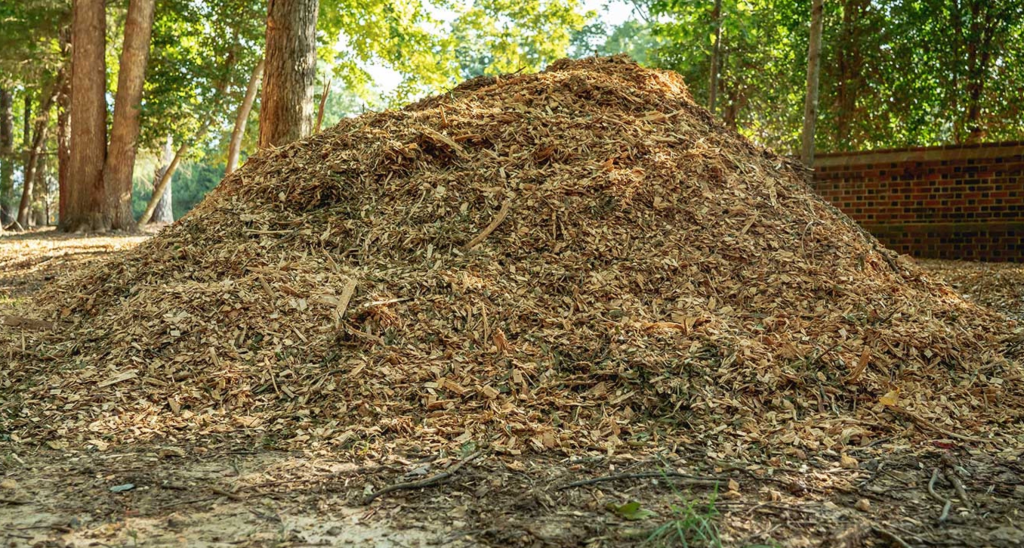
On the Central Coast, we often treat mulch as a finishing touch—the “parsley on the plate.” But from an arborist’s perspective, a proper mulch layer is the single most important tool for long-term tree health. It is a biological buffer, a moisture reservoir, and a soil-building factory all in one.¹
As an independent consultant, I see countless high-end landscapes in Montecito or San Luis Obispo using decorative rock or thin, dyed “beauty bark” that provides zero biological value. True soil stewardship requires a “Living Mulch” strategy that mimics the natural forest floor.
1. The Thermal Buffer
Our Central Coast afternoons in Santa Maria or Paso Robles can easily reach 90°F+. Bare soil—or worse, dark decorative rock—acts as a thermal battery, absorbing solar radiation and radiating that heat back into the root zone.
- Cooking the Roots: Fine feeder roots, which responsible for 90% of water uptake, live in the upper 6 inches of soil. When soil temperatures exceed 85°F, root growth slows; at 95°F, roots can begin to die.²
- The Insulation Effect: A 4-inch layer of coarse wood chips keeps the root zone up to 20°F cooler in the summer and holds onto warmth during our rare frost events in the winter.
2. Moisture Retention and Hydrophobicity
As discussed in our Irrigation Pillar, Central Coast soils are highly prone to becoming hydrophobic (water-repellent) when they dry out completely.
- Preventing the Crust: Mulch prevents the “capping” of the soil surface caused by sun exposure and the impact of irrigation droplets.
- Reducing Evaporation: A consistent mulch layer can reduce soil moisture evaporation by as much as 35%, allowing you to extend the time between your irrigation cycles and save significant water costs.³
3. The Biological Engine
This is where wood chips outperform rock or plastic weed barriers every time. Mulch is “slow-release” food for your soil.
- Feeding the Mycorrhizae: As wood chips decompose, they provide the organic carbon needed by beneficial fungi. These fungi are the “underground internet” that helps your trees find water during a drought.⁴
- Building Soil Structure: Decomposing mulch introduces organic matter into our heavy Adobe clays, creating “macropores” that allow oxygen to reach the roots. Nature builds soil from the top down, and mulch is the primary fuel for that process.
4. The Consultant’s Verdict: The “3-3-3” Rule
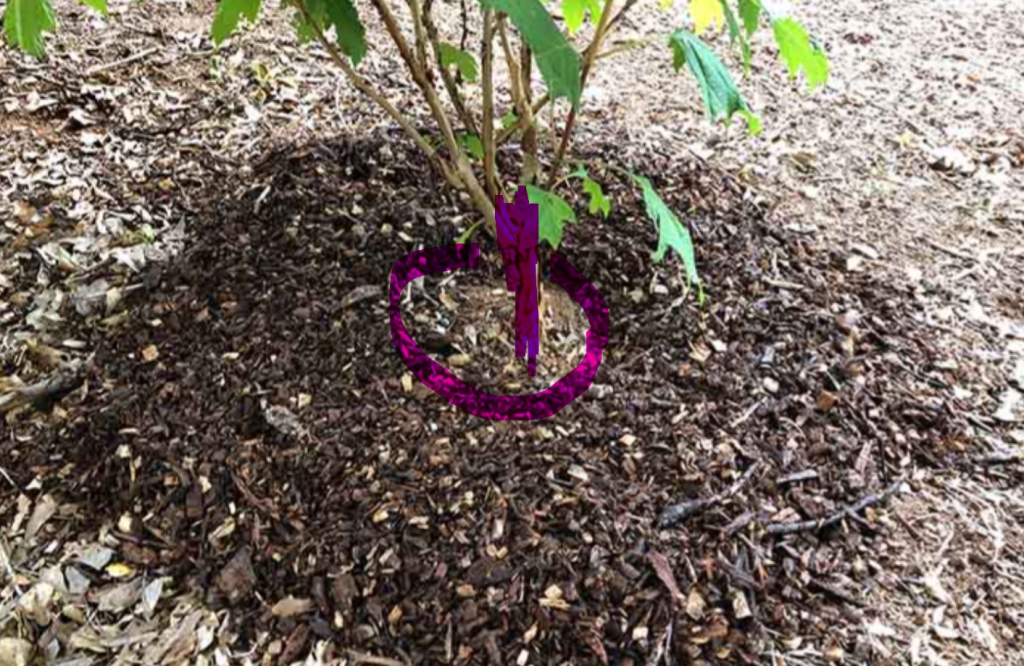
I frequently see “mow-and-blow” crews piling mulch against the trunk of the tree—creating what we call “Mulch Volcanoes.” This trapped moisture against the bark leads to crown rot and fungal infections. To get it right, follow the arborist’s standard:
- 3 Inches Deep: Anything less evaporates too fast; anything more than 6 inches can limit oxygen.
- 3-Foot Radius: At a minimum, though extending to the “drip line” (the edge of the leaves) is always better.
- 3-Inch Gap: Keep the mulch three inches away from the trunk flare. The bark needs to breathe and stay dry.⁵
Professional References
1 Chalker-Scott, Linda, The Informed Gardener, University of Washington Press, Page 45.
2 Harris, Richard W., Arboriculture: Integrated Management of Landscape Trees, Shrubs, and Vines, 4th Edition, Prentice Hall, Page 184.
3 Watson, Gary W., The Root System of Landscape Trees, International Society of Arboriculture, Page 116.
4 Shigo, Alex L., Modern Arboriculture, Shigo and Trees, Associates, Page 212.
5 Craul, Phillip J., Urban Soils: Applications and Practices, John Wiley & Sons, Page 302.
Need a Professional 2nd Opinion?
Is your mulch working for your trees or against them? At ArborSolutions, we provide the data and technical oversight you need to manage your soil health without the conflict of interest. We do not sell mulch, rock, or landscaping services. We provide unbiased professional advice to help you build a resilient, self-sustaining landscape.
Are you tired of looking at bare dirt or hot rocks? Book a Walking-Talking Tour for a site-specific diagnostic and a clear, science-based path forward.