
From Adobe to Sand: Identifying Your Specific Soil Type
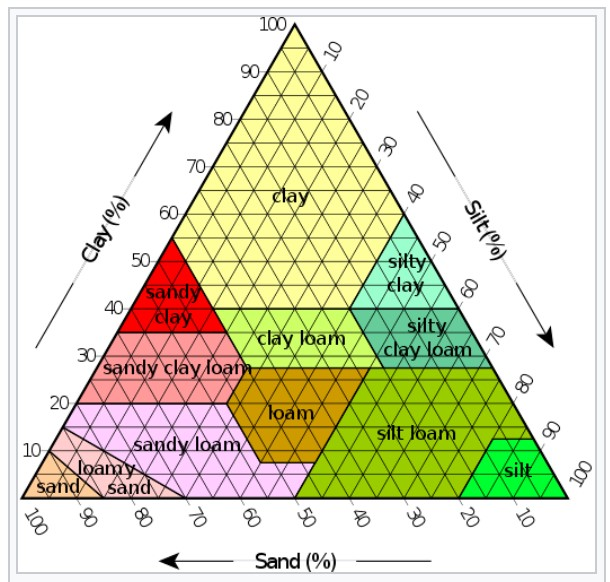
To the untrained eye, “dirt is dirt.” But for a property owner on the California Central Coast, soil is a complex, living filter that dictates the success or failure of every botanical investment. Whether you are dealing with the heavy, expansive Santa Barbara Adobe Clay or the porous, nutrient-leaching Nipomo Sands, your soil profile is the “operating system” of your landscape.¹
As an independent consultant, I view soil management as the foundation of tree health. We don’t just “plant a tree”; we integrate a biological asset into a specific geological context. Identifying your specific soil type is the first step in moving from reactive maintenance to proactive stewardship.
1. The Heavyweight: Central Coast Adobe Clay
Much of our region, particularly in the inland valleys and foothills, is defined by heavy clay. These soils are composed of microscopic, plate-like particles that pack tightly together, leaving very little room for oxygen exchange.
- The Reservoir Effect: Clay has an incredible “Cation Exchange Capacity,” meaning it holds onto water and nutrients with tenacity. However, it also drains at a snail’s pace.²
- The Compaction Risk: Because clay particles are so small, they are highly susceptible to compaction. Compacted clay is essentially biological concrete, suffocating root systems and causing “invisible” drought stress even when the soil is wet.
2. The Sieve: Coastal Sands and Loams
Moving toward the coast in areas like Los Osos, Nipomo, or Baywood Park, the profile shifts dramatically to sand. These particles are large and irregular, creating massive “macro-pores” that allow water to vanish almost instantly.
- Nutrient Leaching: While oxygen exchange is excellent in sandy soil, the “holding power” is non-existent. Irrigation water moves through the profile so quickly that it often carries essential minerals down below the root zone before the tree can absorb them.³
- The Hydrophobic Threat: Sandy soils are particularly prone to developing waxy, water-repellent coatings during our hot, dry summers, which can cause water to “bead up” rather than soak in.
3. The “Ribbon Test”: Field Identification
While a laboratory analysis is the gold standard, you can identify your primary soil texture at home using the “Ribbon Test.” Take a small handful of moist soil and rub it between your thumb and forefinger to create a ribbon.
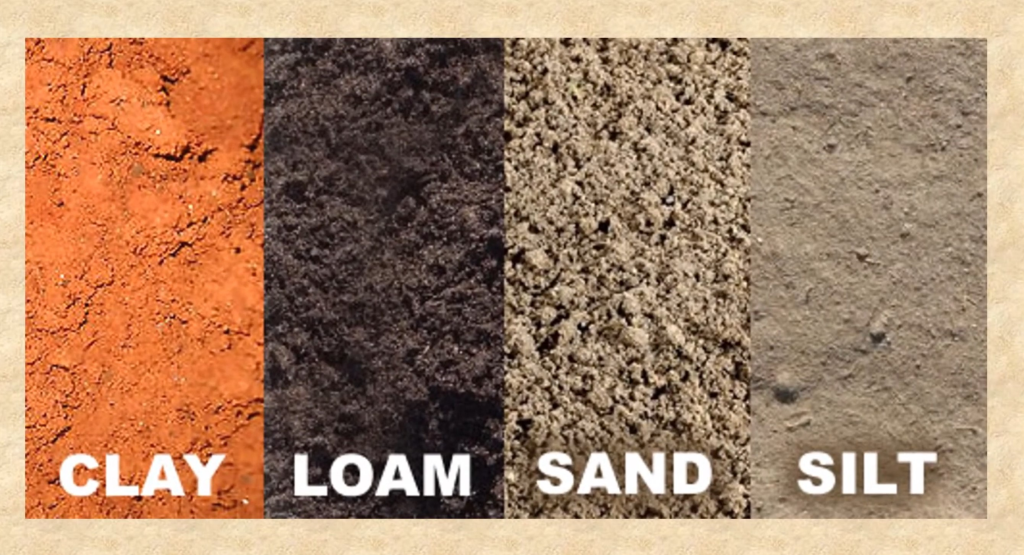
- Clay: Creates a long, flexible ribbon (over 2 inches) that feels slick and sticky.
- Loam: Creates a shorter ribbon (1–2 inches) that feels smooth but slightly gritty.
- Sand: Fails to form a ribbon and feels gritty; the soil falls apart easily.⁴
4. The Consultant’s Verdict: Strategy Over Amendments
I frequently see property owners spending thousands on soil “amendments” based on a recommendation from a big-box store. Without knowing your starting point, you are guessing. A proper identification allows us to tailor your irrigation frequency and nutrient delivery to the actual physical limits of your site. Correcting a “sand” problem requires a completely different strategy than correcting an “Adobe” problem.⁵
Professional References
1 Brady, Nyle C. and Weil, Ray R., The Nature and Properties of Soils, 14th Edition, Pearson Education, Page 12.
2 Craul, Phillip J., Urban Soils: Applications and Practices, John Wiley & Sons, Page 42.
3 Harris, Richard W., Arboriculture: Integrated Management of Landscape Trees, Shrubs, and Vines, 4th Edition, Prentice Hall, Page 144.
4 Shigo, Alex L., A New Tree Biology, Shigo and Trees, Associates, Page 182.
5 Watson, Gary W., The Root System of Landscape Trees, International Society of Arboriculture, Page 108.
Need a Professional 2nd Opinion?
Your soil is the single most important factor in the longevity of your landscape. At ArborSolutions, we provide the data and technical oversight you need to optimize your soil profile without the conflict of interest. We do not sell fertilizers, mulch, or tilling services—we provide unbiased professional advice to help you build a resilient, self-sustaining landscape.
Are your trees struggling despite regular watering? The answer is likely hidden beneath the surface. Book a Walking-Talking Tour for a site-specific diagnostic and a clear, science-based path forward.