
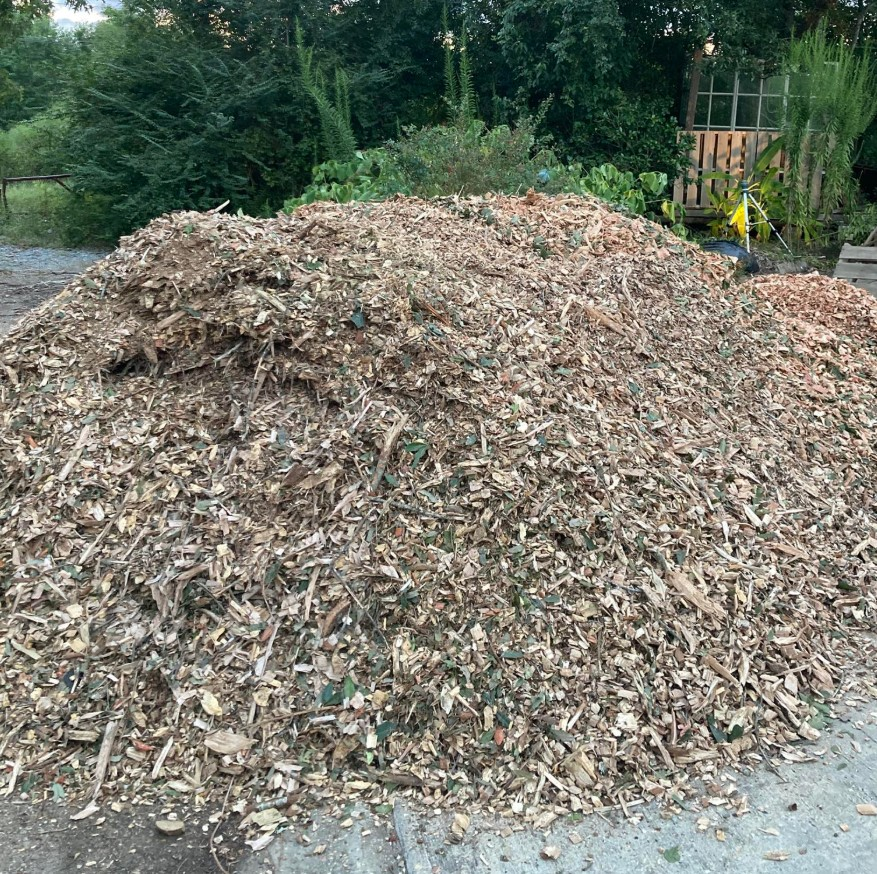
Nitrogen Lock-up: The Hidden Danger of “Fresh” Wood Chips
One of the most common questions I get during a site audit in Santa Maria or San Luis Obispo is: “Won’t fresh wood chips steal the nitrogen from my trees?” The answer is a qualified “yes”—but only if you handle them incorrectly. This phenomenon is known as Nitrogen Immobilization, or more commonly, “Nitrogen Lock-up.”¹
As an independent consultant, I often see property owners avoid free arborist chips in favor of expensive, bagged “bark” because they fear this chemical reaction. In reality, understanding the science of the Carbon-to-Nitrogen (C:N) Ratio allows you to use fresh chips safely while building superior soil health.
1. The Decomposition War
Soil is a competitive environment. Microorganisms (bacteria and fungi) are the primary decomposers of organic matter, and they require two things to do their job: Carbon (energy) and Nitrogen (protein).
- The Imbalance: Wood chips are incredibly high in carbon but very low in nitrogen. When you introduce fresh wood to the soil, the local microbe population explodes to begin the feast.
- The “Theft”: To process all that carbon, the microbes pull every available scrap of nitrogen out of the surrounding soil to build their own tiny bodies. Because microbes are faster and more efficient than tree roots, they “win” the nitrogen war, leaving your plants temporarily deficient.²
2. Tilling vs. Top-Dressing
The “danger” of nitrogen lock-up depends entirely on where the wood chips are placed in the soil profile.
- The Tilling Mistake: If you rototill or dig fresh wood chips into the soil, you are placing the carbon-heavy fuel directly into the root zone. This is where the microbes will intercept the nitrogen meant for your trees, leading to yellowing leaves and stunted growth.³
- The Surface Solution: When wood chips are applied as a surface mulch, the “lock-up” only happens at the very thin interface (less than a millimeter) where the wood touches the dirt. For established trees with deep root systems, this has zero negative impact. In fact, it actually increases nitrogen over time as the chips break down into humus.⁴
3. Identifying the Symptoms: “Microbial Competition”
If you have accidentally incorporated fresh wood into your soil or used it around very young bedding plants, you may see signs of nitrogen deficiency:
- Uniform Yellowing: Unlike pH-induced chlorosis (where veins stay green), nitrogen deficiency usually results in a uniform, pale yellowing of the entire leaf.
- Stunted New Shoots: The tree simply doesn’t have the building blocks to push out new growth.
4. The Consultant’s Verdict: Managing the Interface
I am a firm advocate for using fresh, local arborist chips. They contain the leaves, twigs, and “green” material that commercial bark products lack, providing a more balanced nutrient profile long-term. To avoid the hidden danger of lock-up, follow these professional protocols:
- Never Till: Keep the chips on top. Let the worms and fungi do the work of moving the organic matter into the soil at a natural, balanced pace.
- The “Bridge” Fertilizer: If you are mulching around very young, shallow-rooted saplings with fresh chips, apply a light dusting of an organic, slow-release nitrogen fertilizer (like blood meal or alfalfa meal) before you lay the mulch. This “feeds” the microbes so they don’t have to steal from the tree.⁵
- Acknowledge the Cycle: Nitrogen lock-up is temporary. Once the wood begins to darken and break down, the microbes die off and release all that sequestered nitrogen back into the soil in a form the tree can finally use.
Professional References
1 Brady, Nyle C. and Weil, Ray R., The Nature and Properties of Soils, 14th Edition, Pearson Education, Page 412.
2 Chalker-Scott, Linda, The Informed Gardener, University of Washington Press, Page 62.
3 Harris, Richard W., Arboriculture: Integrated Management of Landscape Trees, Shrubs, and Vines, 4th Edition, Prentice Hall, Page 186.
4 Shigo, Alex L., Modern Arboriculture, Shigo and Trees, Associates, Page 214.
5 Craul, Phillip J., Urban Soils: Applications and Practices, John Wiley & Sons, Page 305.
Need a Professional 2nd Opinion?
Don’t let the fear of “nitrogen theft” prevent you from building healthy soil. At ArborSolutions, we provide the data and technical oversight you need to use local resources effectively. We do not sell mulch, fertilizers, or landscaping services. We provide unbiased professional advice to ensure your soil strategy is backed by science, not garden myths.
Are your new plantings looking pale after a fresh round of mulch? Book a Walking-Talking Tour for a site-specific diagnostic and a clear path to restoring your soil’s balance.