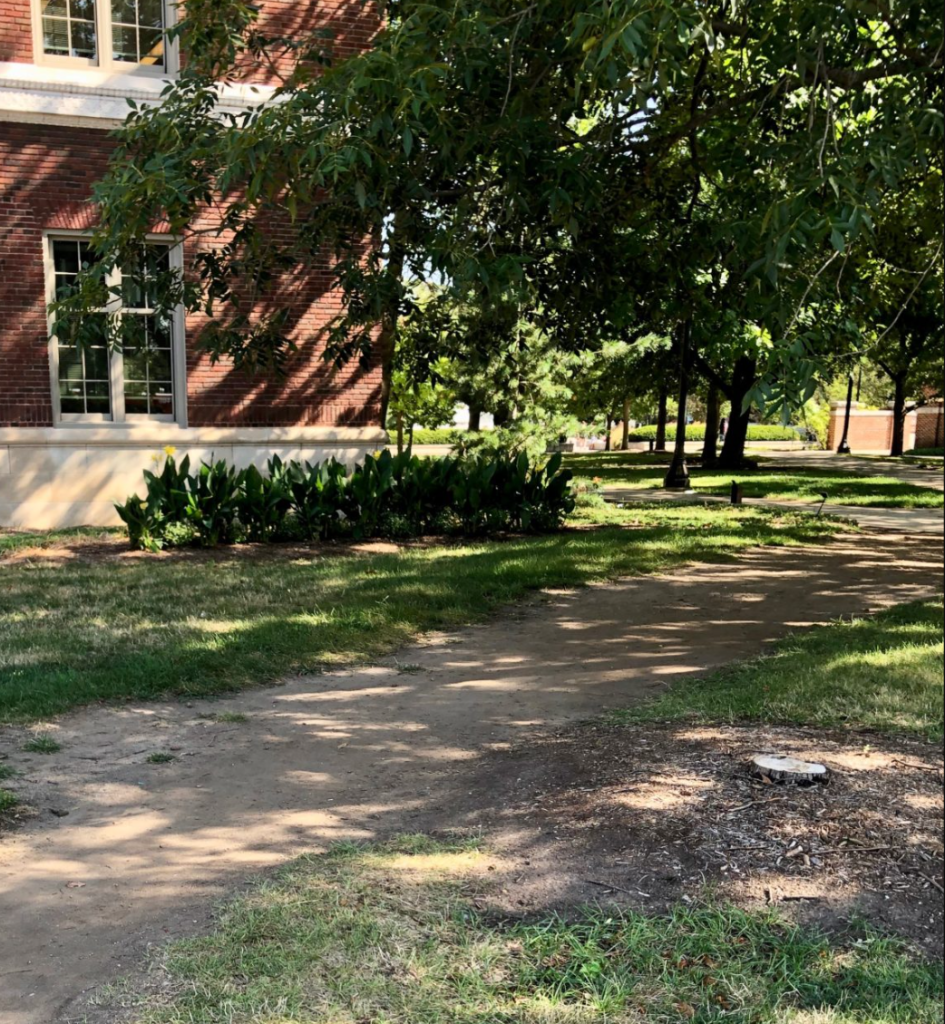
Compaction: The Silent Killer of Urban Trees
In my 25+ years as an independent consultant, I have found that the most devastating threat to a tree’s longevity is often completely invisible. We look at the canopy for signs of stress, but the real crisis is unfolding beneath our feet. Soil Compaction is the “silent killer” of the urban forest—a physical degradation of the soil profile that slowly suffocates a tree from the ground up.
On the Central Coast, where our heavy Adobe Clays are naturally prone to packing tightly, even minor surface activity can lead to a catastrophic loss of soil structure. Understanding how to identify and mitigate compaction is the difference between a thriving specimen and a “hazard tree” in the making.
1. The Anatomy of Compaction: Loss of Pore Space
Healthy soil is approximately 50% solid matter and 50% “pore space.” These pores are filled with a balance of water and oxygen. When soil is compacted—by foot traffic, lawnmowers, or heavy construction equipment—those air pockets are crushed.¹
- The Oxygen Crisis: Tree roots are not just anchors; they are living organs that require oxygen to perform cellular respiration. When pore space is eliminated, the roots essentially “drown” in dry dirt.
- The Physical Barrier: Compacted soil becomes physically too dense for fine feeder roots to penetrate. Instead of a sprawling, stable root mat, the tree is forced to grow a stunted, shallow system that makes it highly susceptible to wind-throw during our winter storms.²
2. Identifying the Symptoms: “The Invisible Decline”
Compaction doesn’t kill a tree overnight. It is a slow, agonizing process that often takes 3–5 years to show visible symptoms in the canopy.
- Canopy Dieback: You may notice “stag-heading”—dead branches at the very top of the tree—as the struggling root system fails to push water to the furthest extremities.
- Leaf Chlorosis: Because the roots cannot function properly, the tree cannot absorb micronutrients, leading to yellowing or stunted leaves.³
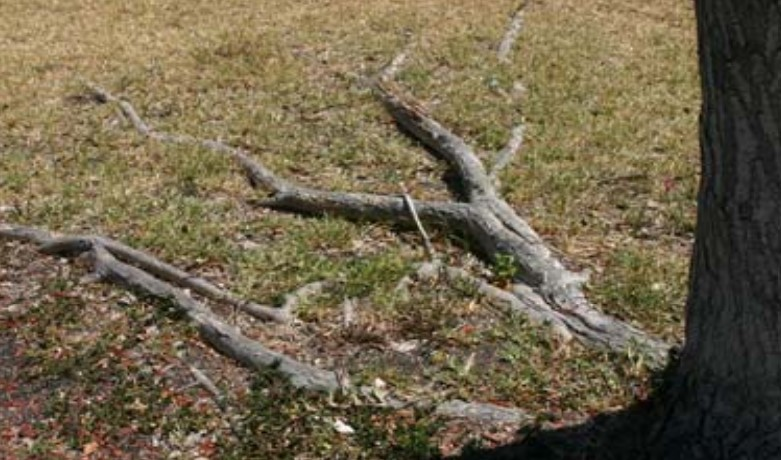
- Surface Rooting: In a desperate search for oxygen, roots will often grow directly on top of the soil surface, creating tripping hazards and making the tree vulnerable to lawnmower damage.
3. The “Penetrometer” Test: Field Diagnosis
A simple way to test for compaction on your property is to use a soil probe or even a long, sturdy screwdriver.
- Healthy Soil: The probe should slide easily into the soil (when moist) to a depth of 12–18 inches.
- Compacted Soil: You will hit a “hard pan” within the first 2–4 inches. If you have to use your body weight to push a screwdriver into the ground, your tree’s roots are likely struggling to survive.⁴
4. The Consultant’s Verdict: Prevention and Remediation
I frequently see “mow-and-blow” crews attempting to fix compaction by simply adding more fertilizer. This is like giving a suffocating person a vitamin—it doesn’t solve the primary problem.
Professional remediation requires physical intervention:
- Vertical Mulching: Drilling a grid of holes and backfilling them with high-quality organic matter to re-introduce oxygen to the root zone.
- Air-Spading: Using high-pressure air to loosen the soil without damaging the delicate roots.
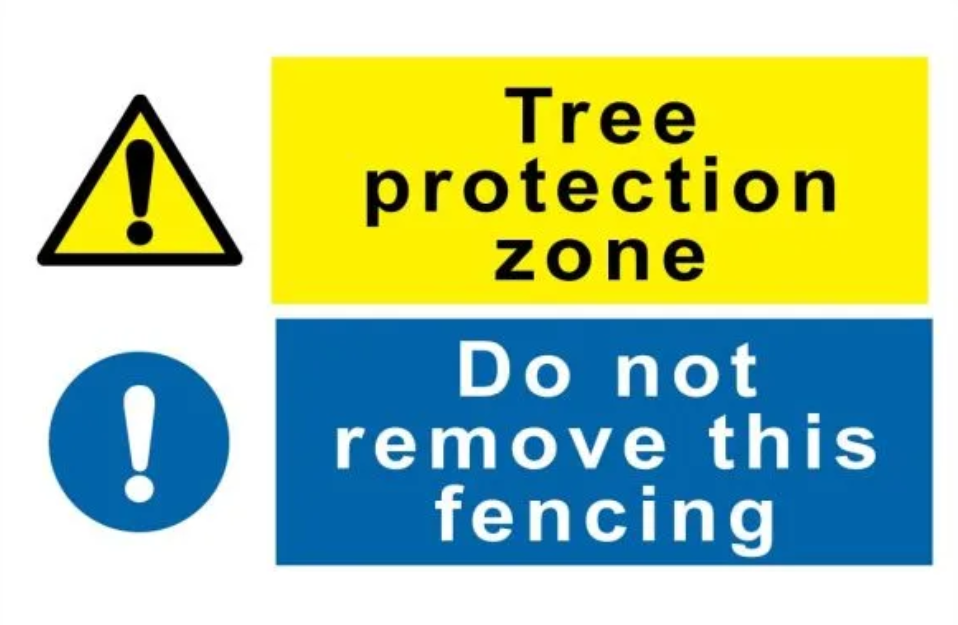
- The Mulch Shield: Establishing a “No-Drive, No-Walk” zone under the tree’s canopy with a 4-inch layer of arborist wood chips is the single best way to prevent compaction from returning.⁵
Professional References
1 Brady, Nyle C. and Weil, Ray R., The Nature and Properties of Soils, 14th Edition, Pearson Education, Page 174.
2 Watson, Gary W., The Root System of Landscape Trees, International Society of Arboriculture, Page 82.
3 Shigo, Alex L., Modern Arboriculture, Shigo and Trees, Associates, Page 156.
4 Harris, Richard W., Arboriculture: Integrated Management of Landscape Trees, Shrubs, and Vines, 4th Edition, Prentice Hall, Page 148.
5 Craul, Phillip J., Urban Soils: Applications and Practices, John Wiley & Sons, Page 210.
Need a Professional 2nd Opinion?
Compaction is a structural and biological emergency for your high-value trees. At ArborSolutions, we provide the data and technical oversight you need to identify and solve compaction issues without the conflict of interest of a service provider. We do not sell tilling, air-spading, or landscaping services—we provide unbiased professional advice to help you save your trees before it’s too late.
Does the ground under your trees feel like concrete? Book a Walking-Talking Tour for a site-specific diagnostic and a clear, science-based path forward.