Soil Salinity: Dealing with “Salty” Dirt in Coastal Zones
For properties in Pismo Beach, Shell Beach, Carpinteria, or Montecito, the soil isn’t just “dirt”—it is a chemical sponge for sodium and chlorides. While some of our native species are adapted to the Pacific breeze, many of our high-value landscape assets are silently struggling against **Soil Salinity.**¹
As an independent consultant, I often find that property owners mistake salt damage for “drought stress” or “wind burn.” However, if you treat salt toxicity by simply adding more of the same mineral-heavy water, you aren’t fixing the problem; you are accelerating the decline of your trees.
1. The Source: Where is the Salt Coming From?
On the Central Coast, salt accumulation typically arrives through three primary pathways:
- Atmospheric Spray: Salt crystals from the ocean are carried by the wind and settle on foliage and soil. Over time, these crystals wash into the root zone.
- Mineral-Heavy Well Water: Many private wells in coastal basins have high Electrical Conductivity (EC), meaning they are naturally rich in dissolved salts.²
- Recycled Municipal Water: As discussed in our Irrigation Pillar, reclaimed water carries a significant salt load that can build up in the soil profile if not managed correctly.
2. The “Physiological Drought”
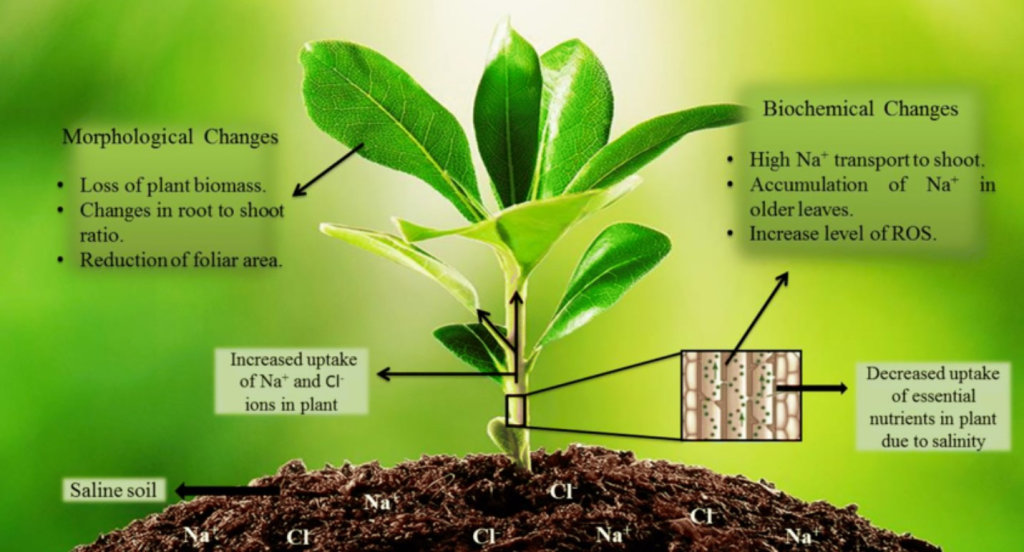
The most dangerous aspect of high soil salinity is that it causes a “Physiological Drought.” Even if the soil is saturated with water, the tree cannot drink it.³
- Osmotic Potential: High salt concentrations in the soil create a chemical “tug-of-war.” The salts pull water away from the root hairs, requiring the tree to spend massive amounts of energy just to pull a single drop of hydration into its system.
- Ionic Toxicity: Once sodium and chloride enter the plant, they travel to the leaf margins. As the water evaporates, the salt stays behind, eventually reaching toxic concentrations that “burn” the living tissue.⁴
3. Identifying the Symptoms: “The Marginal Scorch”
Salt damage has a very specific “look” that differentiates it from a lack of water.
- Marginal Necrosis: Look for brown, crispy, or “burnt” edges on the leaves, while the center of the leaf remains green.
- Stunted Internodes: New growth will be significantly shorter than in previous years, as the tree lacks the energy for expansion.
- Tip Burn on Conifers: On trees like Monterey Cypress or Coast Redwood, the very tips of the needles will turn orange or brown.
4. The Consultant’s Verdict: The “Leaching” Solution
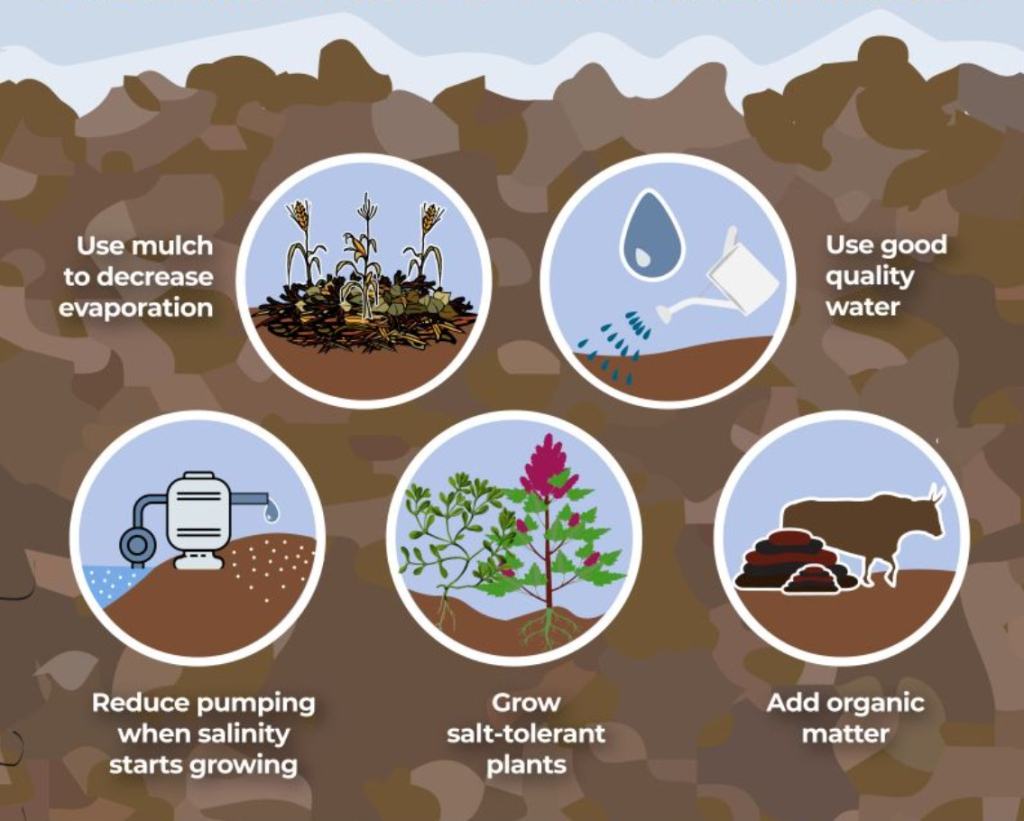
You cannot “neutralize” salt; you can only move it. In our heavy Central Coast clays, salt management is a game of physics and drainage.
- Soil and Water Analysis: You cannot manage what you haven’t measured. A professional lab test will tell us your Sodium Adsorption Ratio (SAR) and help us determine if the issue is coming from your water or your soil.⁵
- The Leaching Fraction: This involves a tactical over-application of “clean” water (when available) to physically push the salt molecules down below the active root zone.
- Gypsum (Calcium Sulfate): On clay soils, gypsum helps displace sodium from soil particles, allowing it to be washed away more effectively during a leaching cycle.
- Strategic Species Selection: If your site is high-salinity, stop fighting nature. We can transition your landscape toward salt-tolerant species like Coast Live Oak, Arbutus, or Olive that are naturally equipped for coastal life.
Professional References
1 Tanji, Kenneth K. and Wallender, Wesley W., Agricultural Salinity Assessment and Management, 2nd Edition, American Society of Civil Engineers, Page 412.
2 Harris, Richard W., Arboriculture: Integrated Management of Landscape Trees, Shrubs, and Vines, 4th Edition, Prentice Hall, Page 210.
3 Brady, Nyle C. and Weil, Ray R., The Nature and Properties of Soils, 14th Edition, Pearson Education, Page 354.
4 Costello, Laurence R., Abiotic Disorders of Landscape Plants: A Diagnostic Guide, University of California Agriculture and Natural Resources, Page 85.
5 Watson, Gary W., The Root System of Landscape Trees, International Society of Arboriculture, Page 122.
Need a Professional 2nd Opinion?
Salt toxicity is a “silent killer” that can take years to manifest, but once it does, the damage is often permanent. At ArborSolutions, we provide the data and technical oversight you need to manage coastal soil chemistry without the conflict of interest of a service provider.
We do not sell gypsum, soil amendments, or irrigation hardware. We provide unbiased professional advice and lab-verified diagnostics to protect your property’s high-value assets with confidence.
Is your coastal landscape showing signs of leaf scorch? Book a Walking-Talking Tour for a site-specific salt diagnostic and a clear, science-based path forward.