
Coastal Succulents: How Fog Changes Your Watering Schedule
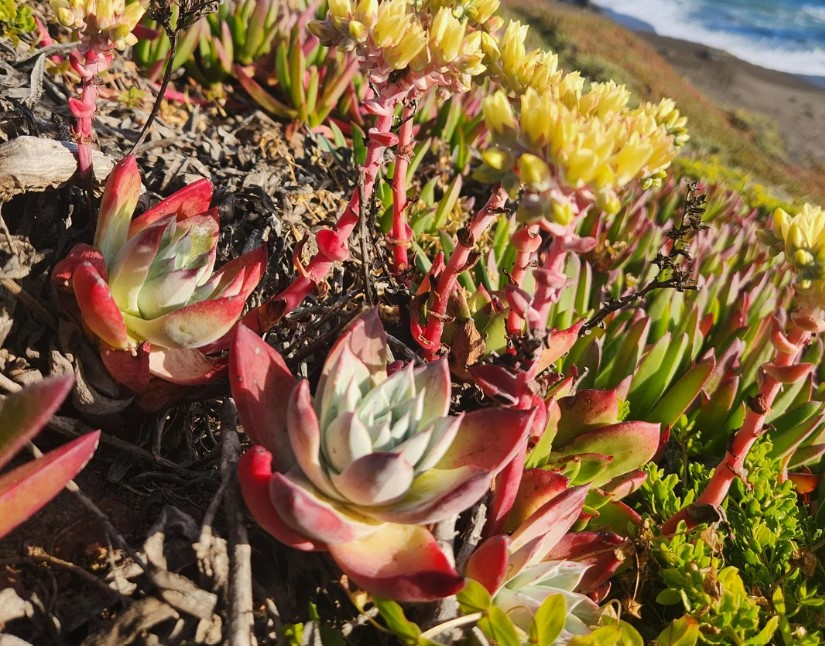
On the California Central Coast, succulents aren’t just a landscaping trend—they are a high-performance survival strategy. From the rocky bluffs of Pismo Beach to the manicured estates of Montecito, these plants are prized for their structural beauty and low water requirements. However, there is a common misconception that “low water” means “no water,” or worse, that a single irrigation schedule works for every zip code.
As an independent consultant, I’ve seen thousands of dollars in high-end succulents lost to “The Fog Factor.” If you aren’t adjusting your irrigation to account for the marine layer, you aren’t just wasting water—you are actively drowning your landscape.
1. The “Fog Factor”: Nature’s Irrigation
The Central Coast is defined by the Marine Layer. This thick, high-humidity fog isn’t just a weather pattern; it is a supplemental irrigation system. Succulents have evolved unique biological mechanisms to capitalize on this moisture through a process called Foliar Absorption.
- Atmospheric Hydration: During our “June Gloom” or late summer fog cycles, the humidity levels often hit 90%+. Succulents can absorb a significant portion of their hydration needs directly through their leaves and specialized surface structures.
- The Cooling Effect: Fog significantly lowers the Evapotranspiration (ET) rate. When the sun is blocked and the air is cool, the plant isn’t “breathing out” moisture, meaning the water already in its fleshy tissues stays put.
2. The Danger of “Scheduled” Irrigation
The most frequent mistake I see during a site audit is a “Smart Controller” or a manual timer set to a summer schedule while the property is under a heavy marine layer.
- The Root Rot Trap: Succulents are remarkably drought-tolerant because they store water in their roots and leaves. If you add irrigation on top of heavy fog, the soil never has a chance to “dry down.” This leads to Anaerobic Soil Conditions, where the roots literally suffocate and rot.
- The Fungal Spike: High humidity combined with excessive soil moisture is a primary trigger for Powdery Mildew and Botrytis, which can disfigure specimen plants like Agave attenuata or Aloe “Hercules” in a matter of days.
3. The Consultant’s Strategy: Seasonal Mimicry
To keep coastal succulents healthy, you must shift from a “Calendar” mindset to a “Conditions” mindset.
- The “Finger Test” is Law: Before your irrigation runs, the top 2–3 inches of soil must be bone-dry. In coastal zones like Los Osos or Carpinteria, this may mean you only run your system once every 14–21 days during a foggy month.
- Morning vs. Evening: Never water succulents in the evening during fog season. Adding moisture to the soil right as the humidity spikes at night creates a “sauna effect” that encourages fungal pathogens. Always aim for a 4:00 AM to 6:00 AM window.
- Drainage is Non-Negotiable: Because our Central Coast clays hold moisture so effectively, succulents should be planted on mounds or in “amended pockets” to ensure that even during heavy fog, the root crown isn’t sitting in standing water.
4. Salt Spray Management
For properties within a mile of the ocean, fog carries more than just moisture—it carries salt. While many succulents are salt-tolerant, a buildup of salt crust on the leaves can lead to “tip burn” and reduced vigor.
- The “Rinse” Cycle: Occasionally, it is beneficial to use a handheld hose to lightly rinse the foliage of your succulents during the early morning. This mimics a light rain and prevents salt toxicity without over-saturating the root zone.
Professional Footnotes
- Data based on UC Division of Agriculture and Natural Resources (UC ANR) studies on coastal succulent water requirements.
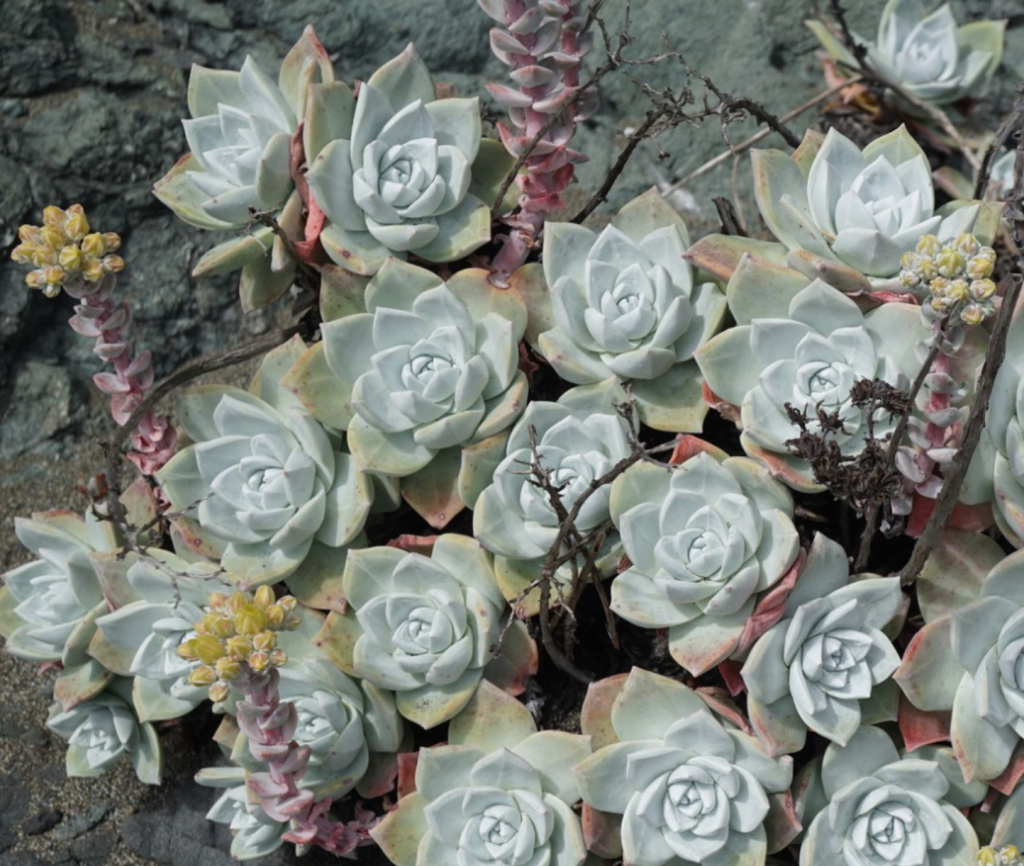
- Consultant Note: Different species react differently to fog. Aeoniums, for instance, are highly adapted to coastal humidity, while desert-native Cacti may require even less water in the same zone.
Need a Professional 2nd Opinion?
Succulents are an investment in your property’s future, but they are often treated with a “one-size-fits-all” approach that ignores the unique microclimates of the Central Coast. At ArborSolutions, we provide the data-driven insights you need to keep your landscape thriving without the guesswork.
We do not sell plants, irrigation parts, or maintenance services. We provide unbiased professional advice and site-specific diagnostics to ensure your landscape assets are protected from the “silent killers” of over-irrigation and poor drainage.
Is your irrigation fighting against the coastal fog?
Book a Walking-Talking Tour for a site-specific diagnostic and a clear, science-based path forward.