
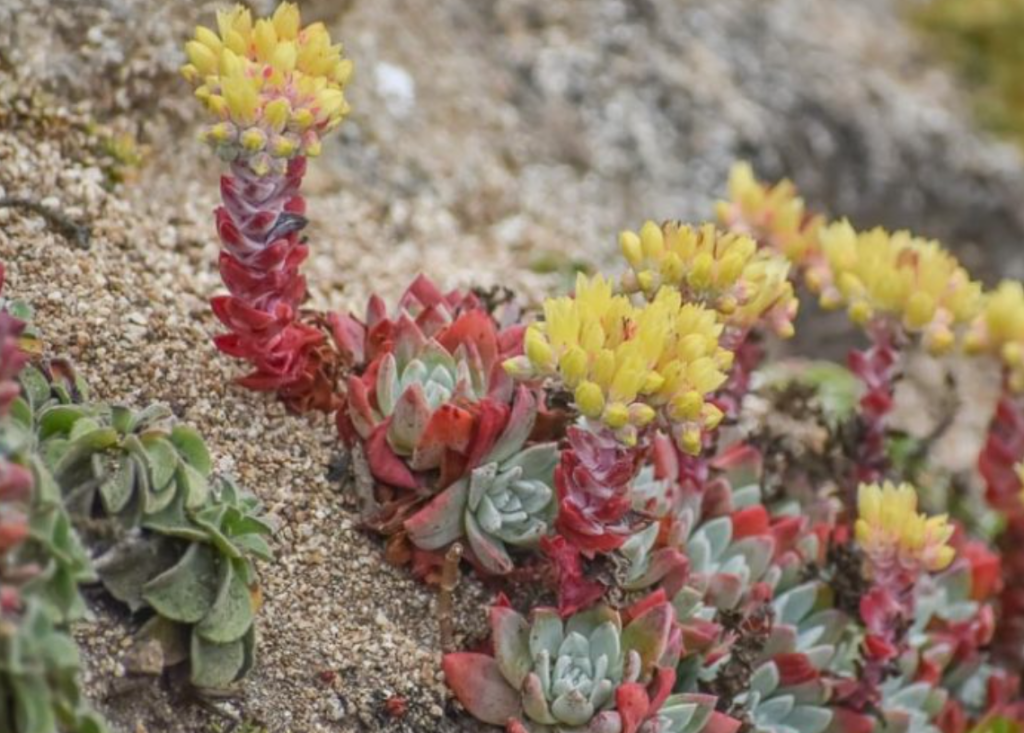
The Diagnostic: Succulents are incredibly popular for their modern look and fire resistance, but many varieties will turn to “mush” and rot away if they are overwatered or planted in heavy, poorly draining soils.
The Science: Succulents are literally water-storage vessels. In the humid environment of our Central Coast Marine Layer, they require vastly less supplemental water compared to their inland desert cousins. They pull ambient moisture directly from the coastal fog.
The Red Flags:
- Black, mushy stems right at the soil line (a clear sign of root rot).
- “Stretching” (etiolation), a condition where the succulent grows unusually tall, pale, and thin as it aggressively searches for more sunlight.
Reference: University of California Agriculture and Natural Resources (UC ANR). “Succulents in the Residential Landscape.”
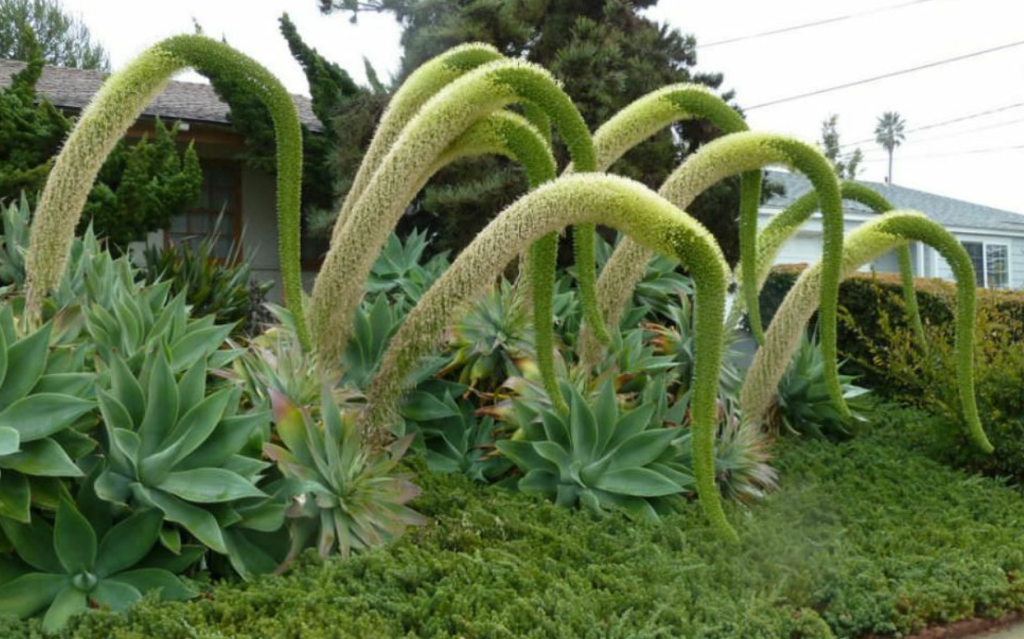
The ArborSolutions Guide’s Action: Plant species like the Fox Tail Agave (Agave attenuata). It provides a massive, sculptural visual impact, is highly fire-safe, and features soft, spineless leaves, eliminating the danger of sharp spikes in residential yards. Ensure they are planted in highly porous, sandy soil.
🔍 Need a Professional 2nd Opinion?
The information above serves as a general guide, but every landscape is a complex, individual living system. If you are seeing these red flags on your property, don’t leave the health and safety of your landscape to guesswork.
At ArborSolutions, we do not sell or perform tree removal or landscaping services. We provide unbiased data and professional advice. We like to think of ourselves as the second opinion go-to before any major property or tree work decisions are made.
Ready to walk your property? Book a “Walking-Talking Tour” for a site-specific diagnostic and a clear, science-based path forward.