3 Visual Signs of Structural Failure
A “hazard tree” isn’t just a tree that looks scary; it’s a tree where a defined structural defect meets a potential target—like your home, driveway, or power lines. On the Central Coast, where our coastal winds and heavy soils challenge tree stability, being able to spot these three signs can save your property—and your tree.
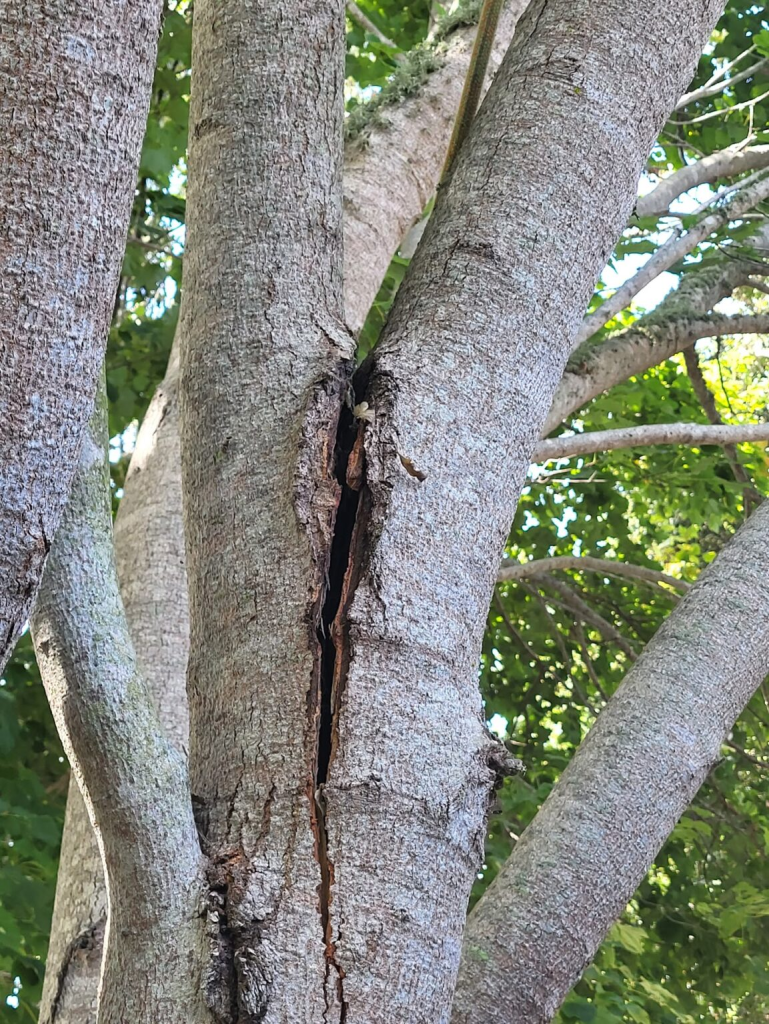
1. The “V-Shaped” Inclusion
Look at where the main trunks of your tree meet. If they form a tight “V” shape rather than a wide “U,” they likely have included bark. This means the bark is growing into the joint instead of the wood knitting together. This is a notorious failure point for Eucalyptus and older Oaks during high-wind events.
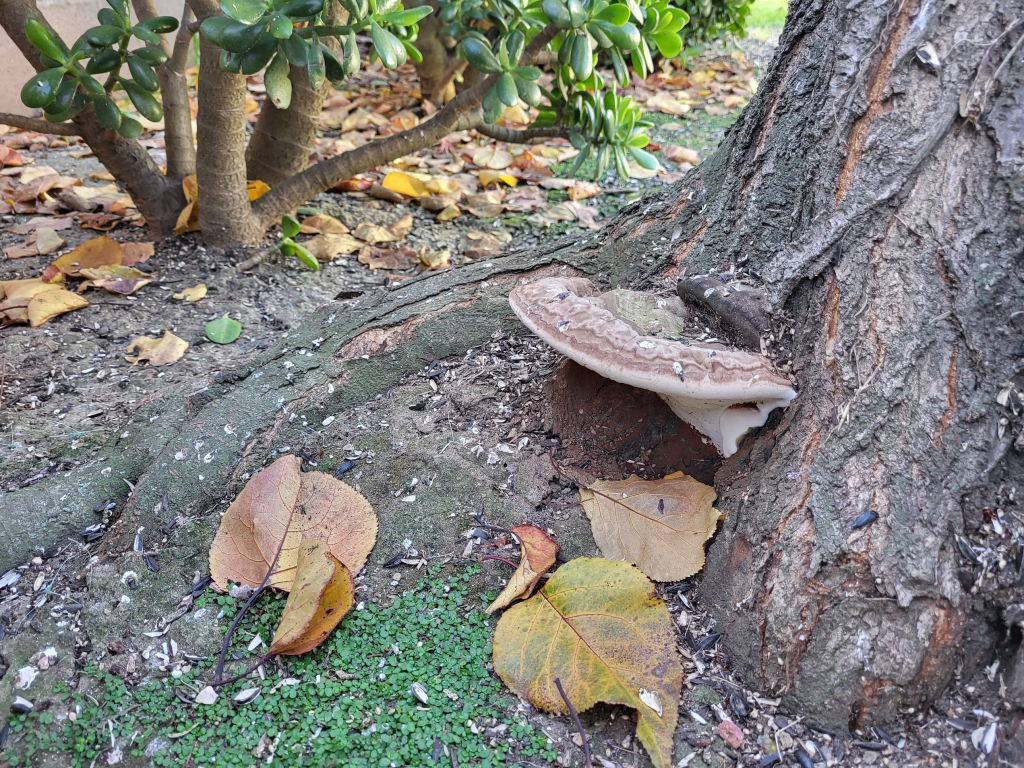
2. Fungal Brackets at the Base
If you see “Conks” or mushroom-like growths at the soil line or on the trunk flare, do not simply kick them off. These are the fruiting bodies of internal decay fungi. They indicate that the structural wood inside the tree or the anchoring roots below are being “digested” by rot.
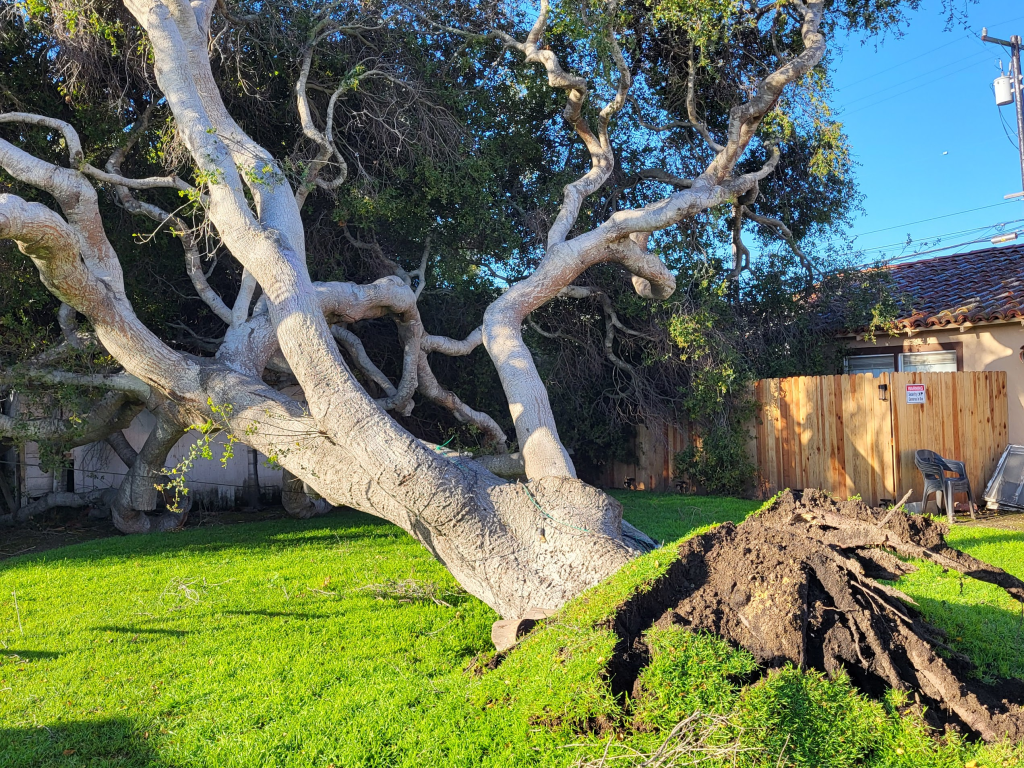
3. The “Heaving” Soil Line
Walk around the base of your tree. If the soil is cracking or “lifting” on one side, or if you see fresh roots exposed that weren’t there last season, the tree may be leaning. This “heaving” often happens after heavy rains when the soil becomes saturated and loses its “grip” on the root ball.
Footnotes: ¹ International Society of Arboriculture (ISA). “Tree Risk Assessment Manual.”
² Matheny, N.P. & Clark, J.R. “A Photographic Guide to the Evaluation of Hazard Trees in Urban Areas.”
The ArborSolutions Diagnostic
A visual sign doesn’t always mean the tree must come down. It means it needs a Level 2 Basic Assessment. As independent consultants, we provide the data to determine if the tree can be cabled, braced, or pruned to mitigate the risk without the conflict of interest inherent in a tree-removal service.