
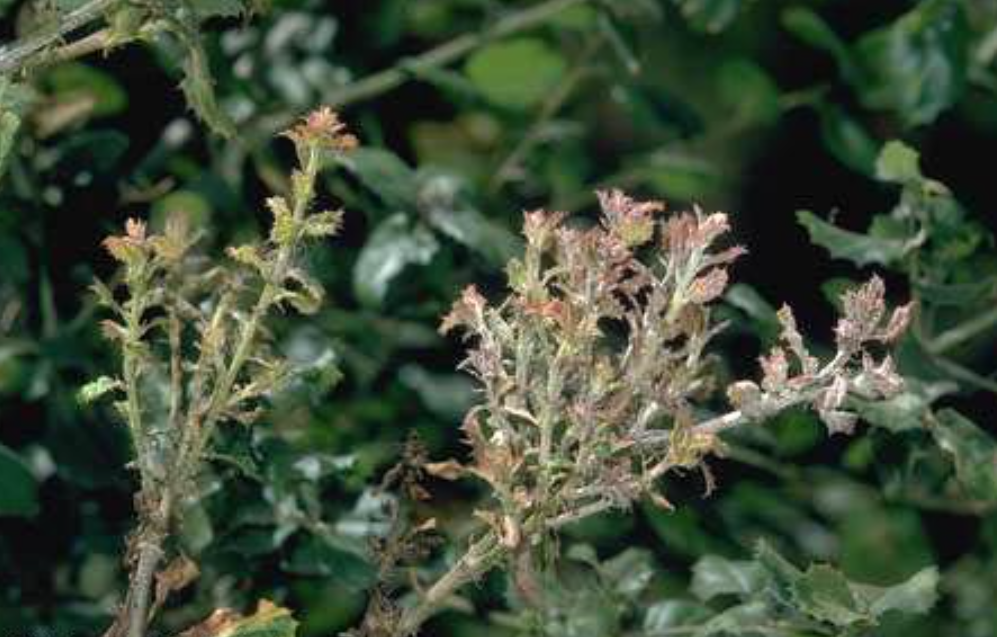
The Diagnostic: A white, flour-like coating appears out of nowhere on the new leaves of Oaks and surrounding shrubs. Over time, it often causes the leaves to curl, stunt, or become visibly distorted.
The Science: This is a fungal infection (Erysiphe) that absolutely thrives in the high humidity of our Central Coast Marine Layer. Unlike many fungi, Powdery Mildew doesn’t need physical rain to grow; it only needs high ambient humidity and stagnant air.
The Red Flags:
- Distinct white patches on the surface of tender new growth.
- “Witches’ brooming”—distorted, stunted, and tightly packed clusters of leaves.
The ArborSolutions Guide’s Action: The cure here is physics, not chemicals. Improve the airflow. We often recommend structural Crown Thinning to allow the coastal breeze to move freely through the canopy, naturally drying out the foliage. Additionally, avoid any late-evening overhead watering, which leaves the foliage damp through the night.
Reference: University of California Statewide IPM Program (UC IPM). “Powdery Mildew on Ornamentals.”
🔍 Need a Professional 2nd Opinion?
The information above serves as a general guide, but every tree is a complex, individual living system. If you are seeing these red flags on your property, don’t leave the health and safety of your landscape to guesswork.
At ArborSolutions, we do not sell or perform tree removal or trimming services. We provide unbiased data and professional advice. We like to think of ourselves as the second opinion go-to before any major tree or landscape work decisions are made.
Ready to walk your property? Book a “Walking-Talking Tour” for a site-specific diagnostic and a clear, science-based path forward.