In Santa Barbara and San Luis Obispo Counties, we love our large, mature trees. But as trees age—or when storms roll in off the Pacific—property owners often face a difficult question: “Is that tree going to fall on my house?”
Guessing is not an option. Neither is relying on a “free estimate” from a company that makes money by cutting trees down.
What is a TRAQ Assessment?
TRAQ stands for Tree Risk Assessment Qualification. It is an advanced credential from the International Society of Arboriculture (ISA) that trains arborists to systematically evaluate tree hazards.
Unlike a standard “tree check,” a TRAQ assessment is a scientific process. I look at:
- The Target: What would the tree hit if it fell? (A house? A playground? A parked car?)
- The Site Factors: Soil stability, wind exposure, and recent construction damage.
- The Tree Defects: Hidden decay, weak branch unions, and root issues that aren’t visible to the untrained eye.
Level 2 vs. Level 3: What Do You Need?
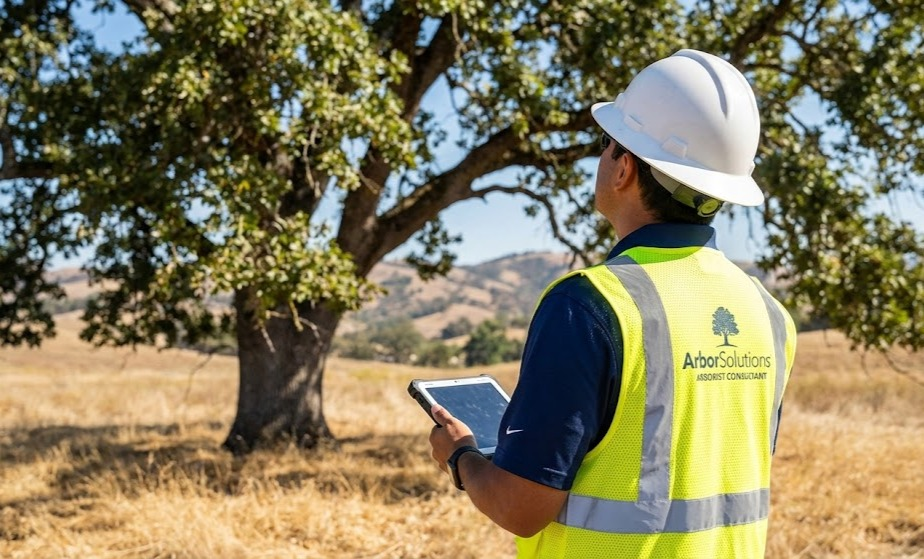
Most homeowners need a Level 2 (Basic) Assessment. This involves a 360-degree ground inspection and the use of simple tools like a mallet (to listen for hollows) and probes.
For high-stakes situations—like a heritage oak near a school—we might move to Level 3 (Advanced). This can involve aerial inspections, digital tomography or resistance drilling to map internal decay without hurting the tree.
Why You Need a Written Report
A verbal “it looks okay” doesn’t hold up in court or with your insurance company.
As Independent Consultants, we provide a detailed, written report that outlines the Likelihood of Failure and the Consequences. This document is essential for:
- Insurance Claims: Proving that a tree was healthy (or hazardous) before a storm.
- Neighbor Disputes: Resolving conflicts over property line trees with facts, not feelings.
- Peace of Mind: Knowing you made a decision based real on data, not fear.
Don’t Guess on Safety We are ISA TRAQ Qualified and provide unbiased risk assessments across the Central Coast. W don’t bid on the removal or other tree work, so you can trust that our safety recommendations are 100% objective.