
California’s weather patterns are shifting, and for trees in Santa Barbara and San Luis Obispo Counties, that means one thing: Stress.
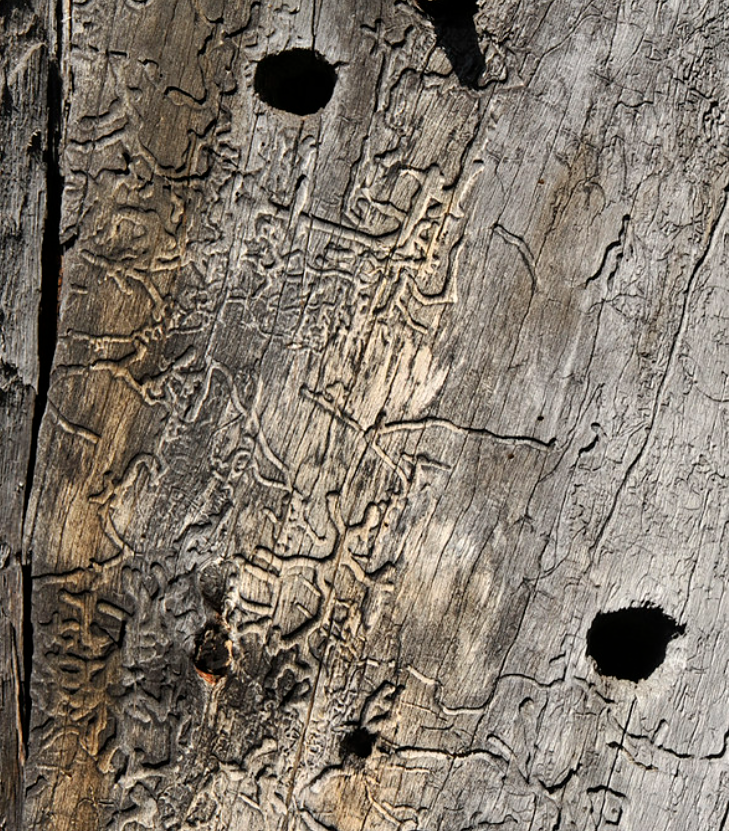
When a tree is drought-stressed, it doesn’t just look thirsty; its natural defense systems shut down. A healthy tree can “pitch out” (push out sap) to drown invading beetles. A thirsty tree cannot. This makes our native pines and oaks sitting ducks for the Western Pine Beetle and the Red Turpentine Beetle.
The “Silent” Signs of Stress
Most homeowners wait until the leaves turn brown to call an arborist. By then, it is often too late. Here is what to look for before the tree dies:
- Canopy Thinning: If you can see through the tree more than usual, it’s shedding leaves to save water.
- Pitch Tubes: Look for small blobs of white or reddish sap on the trunk (like popcorn). This is the tree fighting for its life against beetles.
- Frass: Fine sawdust at the base of the tree is a sure sign of boring insects.
What You Can Do (And What to Avoid)
Many well-meaning homeowners accidentally hurt their trees during a drought.
- Do Not Over-Prune: Pruning stimulates growth, which requires water the tree doesn’t have. Avoid heavy pruning during drought years unless it’s a safety hazard.
- Deep Watering is Key: Sprinklers are for grass, not oaks. Use a soaker hose at the “drip line” (the outer edge of the branches) and water deeply once a month to mimic a heavy rain.
- Mulch Matters: A 3-4 inch layer of wood chips keeps the roots cool and holds moisture in. Just keep it away from the trunk itself.
When to Call for a Risk Assessment
If you see pitch tubes or sudden branch dieback, you need an objective assessment immediately.
Get an Unbiased Diagnosis I don’t sell spray treatments or removal services. I provide the diagnostic data you need to decide if your tree can be saved or if it poses a risk to your home.